Because of my medical background, I already had a solid understanding of the human body, including how the liver functions. However, my perspective on health, nutrition, and my own body changed completely when I was diagnosed with autoimmune hepatitis (AIH) in 2018.
From that moment on, I was not only dealing with medical tests, hospital appointments, and medication, but also with an important question: what could I do myself to support my body as much as possible?
Nutrition became an important part of that journey. I wanted to understand what my body needed, so I started looking for reliable information. I read scientific articles, spoke with healthcare professionals, and explored which foods best suited my body's needs. At the same time, I paid close attention to how I felt. Which foods gave me energy? When did I feel stronger? And what seemed to have less effect?
Throughout this journey, I increasingly discovered that nutrition can play an important role in maintaining good health when living with a chronic liver disease. Although nutrition cannot cure AIH, it can help support the body, preserve muscle mass, and reduce the risk of certain complications.
My interest in nutrition continued to grow. What started as a search for answers for myself eventually became a passion. That is why I decided to pursue a degree in Nutrition and Dietetics. I wanted to understand how nutrition affects a healthy body, but also how it can contribute to the health and quality of life of people living with chronic conditions.
In AIH, the liver becomes chronically inflamed because the immune system attacks the body's own liver cells. The liver performs hundreds of vital functions, including processing nutrients, storing energy, and supporting metabolism. When the liver remains inflamed over a long period, it can affect energy levels, muscle strength, and overall health.
For that reason, nutritional advice focuses not only on healthy eating but also on supporting the body during illness. Key goals include:
- Maintaining or improving nutritional status;
- Preserving or building muscle mass and strength;
- Preventing or reducing complications, such as osteoporosis and liver cirrhosis;
Supporting overall health and quality of life.
One topic that frequently arises in liver disease is the importance of protein. When people think about nutrition, they often focus on body weight, but muscle mass is just as important.
Chronic inflammation, fatigue, or a reduced appetite can lead to muscle loss. This may result in lower energy levels, greater difficulty performing daily activities, and slower recovery. As a result, people with AIH often have higher protein requirements than healthy adults.
According to the Dietary Treatment Guidelines, protein requirements for people with AIH range from 1.0 to 1.5 grams of protein per kilogram of body weight per day. Protein is an essential building block for the body and helps maintain and repair muscle mass.
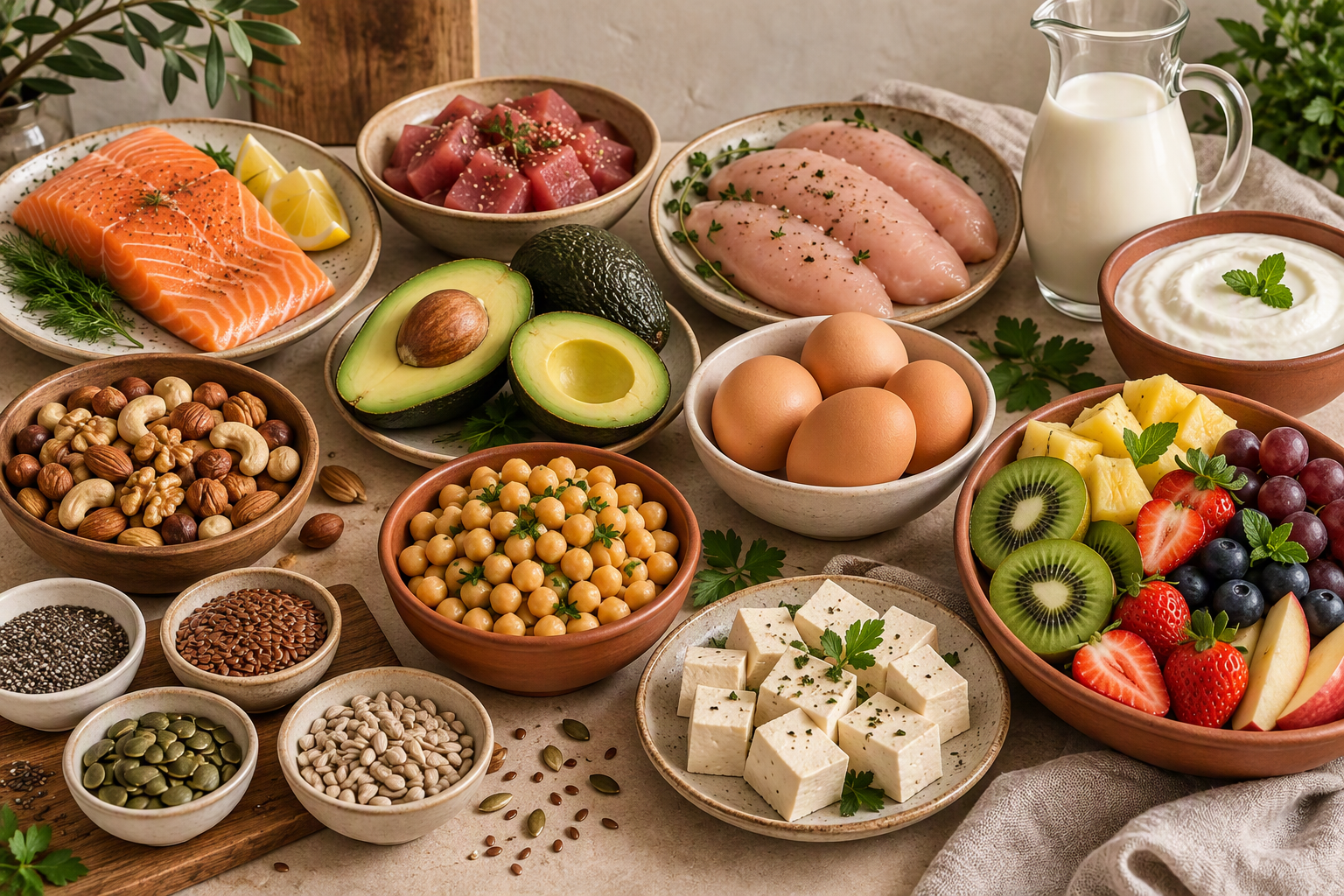
Good sources of protein include:- Milk, yogurt, and quark;
- Eggs;
- Fish;
- Chicken and other lean meats;
- Legumes;
- Nuts;
- Tofu and other plant-based protein sources.
Personally, I aim for 1.5 grams of protein per kilogram of body weight per day. This works well for me because I do strength training approximately five times per week, and maintaining muscle mass is especially important to me. However, this is a personal choice within the recommended range and may not be suitable for everyone.
In general, consuming more than 1.5 grams of protein per kilogram of body weight per day on a long-term basis is not recommended for people with AIH unless specifically advised by a physician or dietitian. When liver function is impaired, the body may process protein less efficiently. In some situations, this can lead to a buildup of waste products in the body. Therefore, it is important to discuss higher protein intakes with your healthcare provider or dietitian so they can assess your individual situation.
When it is difficult to meet energy or protein requirements through regular food intake alone, a dietitian may recommend oral nutritional supplements. In some cases, tube feeding may even be necessary to improve or maintain nutritional status.
In addition to consuming adequate protein, it is equally important to actively use your muscles. Building and maintaining muscle mass can contribute to better physical fitness, greater independence in daily life, and a higher quality of life. Strong muscle mass can also help support recovery after illness, hospitalization, or complications related to liver disease.
For this reason, physical activity, and particularly strength training, is a valuable complement to a healthy diet. This does not mean that everyone needs to spend hours in the gym. Strength training can be adapted to suit your body, abilities, and personal circumstances.
For some people, working out at a gym is an excellent option. For others, resistance bands, light weights, or bodyweight exercises may be more suitable. Even if you have limited mobility, there are still options available, such as chair exercises or simple strength-training routines performed at home. Any form of muscle-strengthening activity can help maintain muscle strength and muscle mass.
My personal experience with strength training is that it makes me feel stronger and more confident in what my body is capable of. AIH has taught me not to focus too much on my illness, but rather on what my body can still do.
In addition to adequate protein intake, vitamin D and calcium deserve special attention. This is particularly important for people with AIH who use prednisone, as long-term prednisone use can increase the risk of osteoporosis.
Calcium plays an essential role in maintaining strong bones and teeth. Good sources of calcium include milk, yogurt, quark, cheese, fortified plant-based alternatives, nuts, and certain vegetables. Vitamin D is equally important because it helps the body absorb calcium effectively.
Vitamin D is unique because our bodies produce most of it through exposure to sunlight. However, in the Netherlands, this is not always sufficient. Due to the climate and the relatively limited amount of sunlight throughout the year, many people do not produce enough vitamin D. For some individuals, taking additional vitamin D may therefore be advisable. This may be in the form of an over-the-counter supplement purchased at a pharmacy or drugstore. In certain situations, a physician may prescribe a higher dosage, for example when a deficiency has been confirmed or when someone is at increased risk.
For people with darker or more deeply pigmented skin, this topic is even more important. Melanin, the pigment that gives the skin its color, helps protect against the sun but also reduces the skin's ability to produce vitamin D efficiently.
If you are unsure whether you are getting enough vitamin D, discuss this with your doctor or dietitian. A blood test can sometimes determine whether there is a deficiency and whether supplementation is necessary.
One of the most important lessons I learned throughout my own journey is that no two patients are the same. Some people experience relatively few symptoms, while others may develop liver cirrhosis, esophageal varices, or even require a liver transplant.As a result, there is no single dietary pattern that is suitable for everyone with AIH. Nutritional advice should always be tailored to an individual's personal circumstances, medical treatment, and any complications they may have. What works well for one person may not necessarily be appropriate for another.
Final Thoughts
When I was first searching for information, I found that reliable information was often difficult to find. Through this website, I hope to combine my personal experiences with current, evidence-based knowledge.
My goal is not to replace medical advice, but to make information more accessible for people living with AIH, other liver diseases, liver cirrhosis, esophageal varices, or those who have undergone a liver transplant.
I hope that the knowledge I have gained throughout my own journey can help others better understand what is happening in their bodies and the role nutrition can play in supporting their health.
What has helped me most is viewing nutrition as a way to support my body as effectively as possible. I have learned that small, intentional choices can make a significant difference over time and help me live as strongly and fully as possible with my condition.
With love,
Diarra
Source
The information in this article is based on the Dietary Treatment Guideline for Disorders of the Liver, Gallbladder, and Bile Ducts (Dieetbehandelingsrichtlijn Aandoeningen van de lever, galblaas en galwegen). This guideline is used by dietitians and other healthcare professionals in the Netherlands and is based on the most current scientific evidence regarding nutrition and liver diseases.